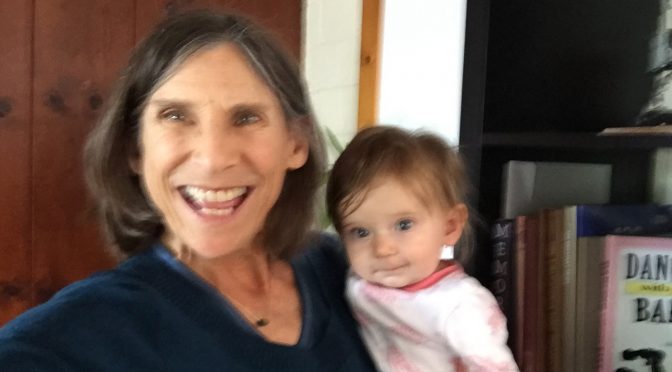
In September of 2016, I ecstatically added to the burgeoning class of baby-boomers becoming grandparents. There are 70 million Americans a year joining the ranks. Caregiving my granddaughter during the workweek is a bit of heaven, and much comfort to her parents. It’s also longevity enhancing for me: the Berlin Aging Study found that grandparents who provided non-custodial childcare died at a rate 37% lower than for grandparents who did not provide childcare, and even non-grandparents benefited if they did caregiving .
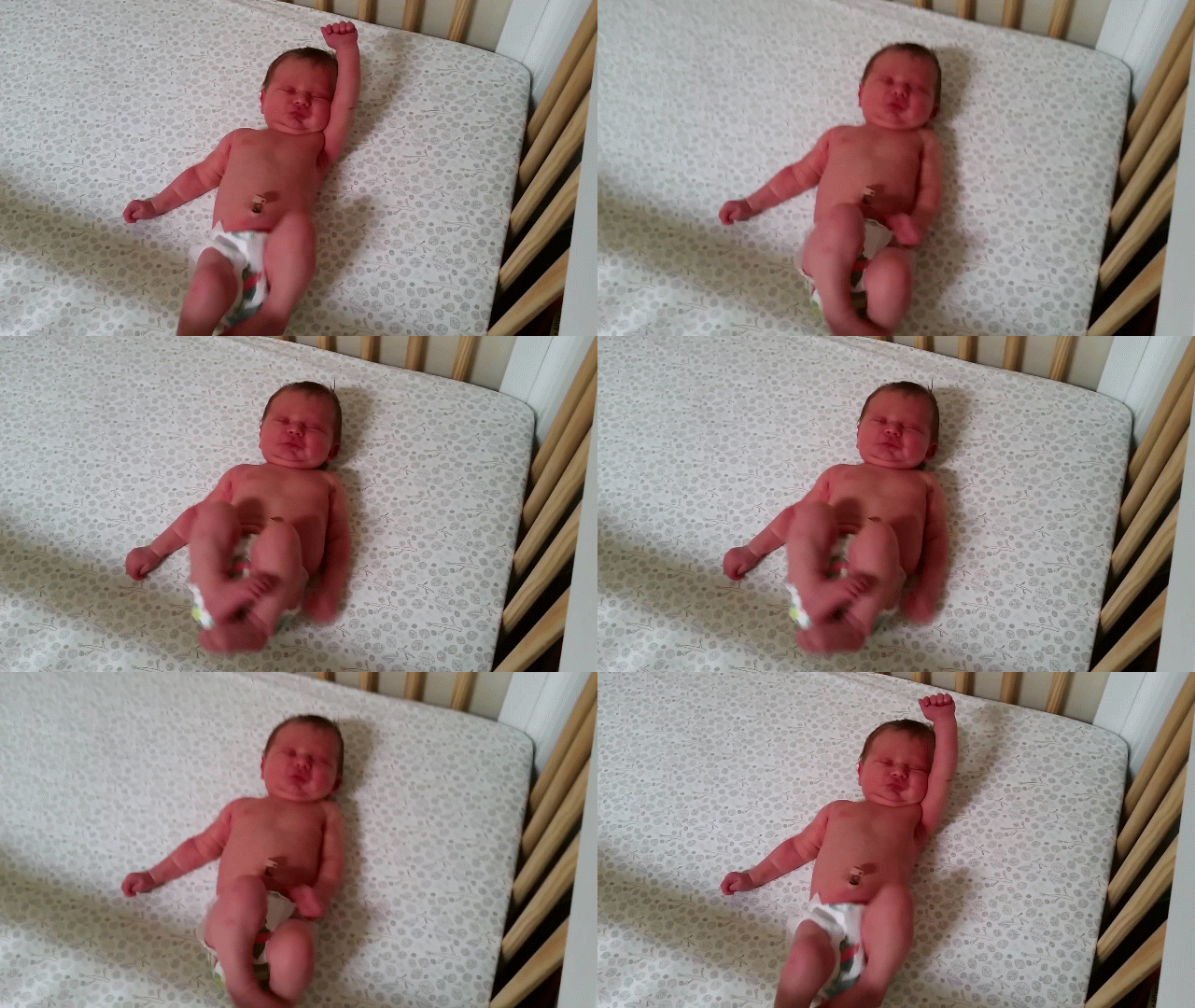
7 Reasons a Baby Twitches & Moves from Tongue to Toes
Have you noticed how often a baby twitches in his or her sleep, or waves, wiggles and squirms about while awake, including tongue fasciculations? Is all this movement necessary? What can the science of sensorimotor development tell us about these phenomena? Here are 7 reasons why a newborn baby twitches and moves every little and big part of their body. Read more

The Power of Music
Music is a profound pleasure, even for babies–why? As neurologist, Oliver Sacks, explained: “music occupies more areas of our brain than language does—humans are a musical species”! Indeed, researchers at MIT recently discovered a distinct region for music, apart from language, in the auditory processing area. Beyond the sharing of similar sound signatures that would integrate language and music processes, music perception resides alone.

No Matter Our Age–Dance Matters
Dancing is found in every culture; it is fundamental to who we are as humans. Our instinct to sync to a musical beat begins in infancy. Babies are unable actually to tap their toes to the music, but their little brain waves sync to the beat. Dance lights up the brain as it stimulates several areas: musical, language, emotional, kinesthetic, and rational predictive. Read more
Podcast: Dancing With Your Baby author interview with Mr. Dad

On Father’s Day 2015 I did an author interview on KOIT radio (San Francisco) with Armin Brott (aka Mr. Dad) for his “Positive Parenting” show. Listen here.